Love for Bad Bunny & His Historic Super Bowl Half-Time Show
Article by Dexter Hargreaves, University Union Editorial Board
Staff Writer | Photo by Kevin Sabitus (Getty Images)
Bad Bunny’s monumental performance at the Super Bowl LX Half Time Show was a gigantic love letter to Latin American culture and a testament to the power of love. Benito Antonio Martinez Ocasio, as he introduced himself, reiterated his message from the Grammys, that the only thing more powerful than hate is love. Through his landmark performance, he proved it.
The set pieces used all reflected different elements of Latin American and Puerto Rican culture and history. From sugar cane workers wearing traditional pava hats, to a real landmark social club that has lasted for decades through gentrification, to the pink Casita piece filled with Latine artists and celebrities, to a real wedding. Each moment was placed carefully and placed with love.
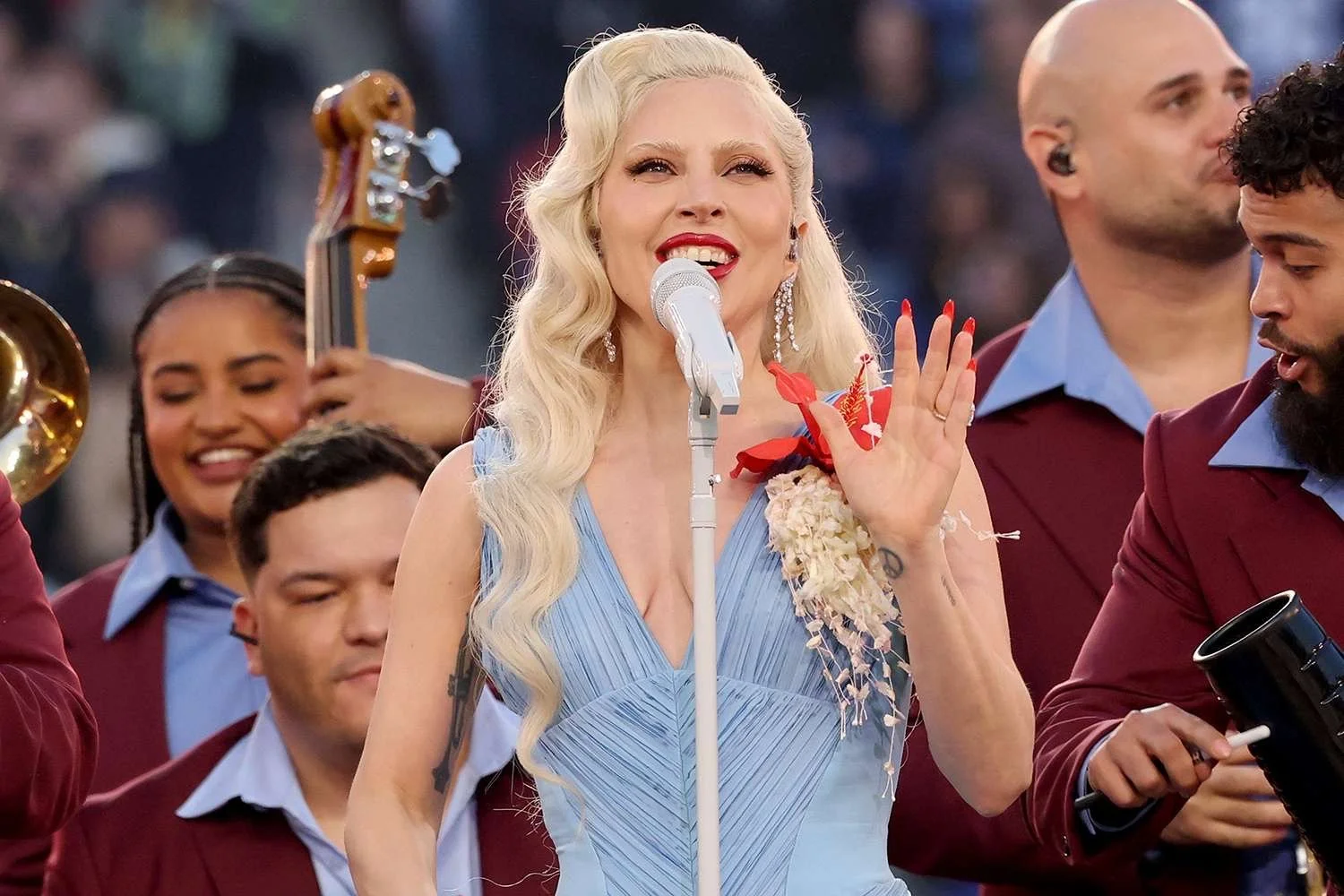
Photo by Kevin Mazur (Getty Images)
Bad Bunny also pays tribute to the Puerto Rican communities that have established themselves as vital parts of cities in the United States. The social club owner mentioned before, who gave a shot to Bad Bunny, is Maria Antonia “Toñita” Cay, a trailblazer for Puerto Ricans in New York City. She is the decades-long owner of the Caribbean Social Club in Williamsburg, Brooklyn. To Nuyoricans, she has acted as a bastion for the community through her continuous support and resilience in difficult times.
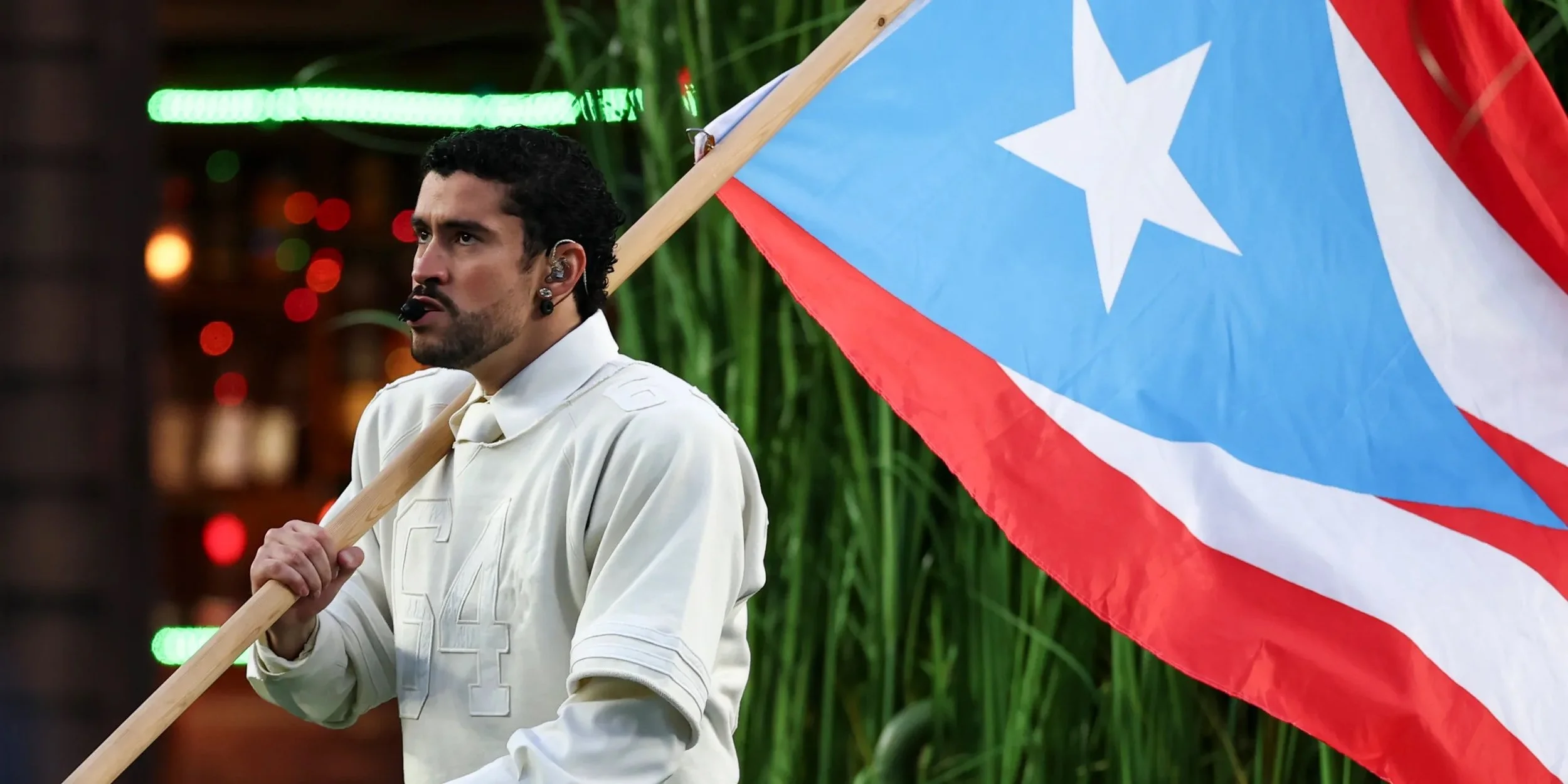
Viewers familiar with Puerto Rican history picked up on the symbolism of the light blue worn by Lady Gaga and her band. From 1948 to 1957 in Puerto Rico, it was illegal to fly the flag of Puerto Rico, which then contained a light blue. This was an effort to put down independence movements by the island’s first governor. When the law was amended, the official flag was replaced with one containing a darker blue, one like the American flag. Bad Bunny makes it clear where he stands, both through the costume designs and the flag that he himself bears during this performance during “El Apagón”.
The set for “El Apagón" is meant to draw attention to the problems in Puerto Rico that aren’t being addressed. The electrical workers standing on the power lines represent the years-long blackouts caused by hurricanes. These blackouts have yet to be solved for much of the island due to a lack of government funding. Though largely a celebration, here, Bad Bunny reminds audiences of the vast number of people still suffering in Puerto Rico.
One of the most touching moments of the show came during the performance of “NUEVAYoL”. Bad Bunny gave his recently won Grammy award to a young boy watching his acceptance speech on TV. Here, Bad Bunny is passing his win on to the next generation, giving them hope and proof that they can succeed too. As a whole, this song inspired a powerful sense of hope among many Americans.
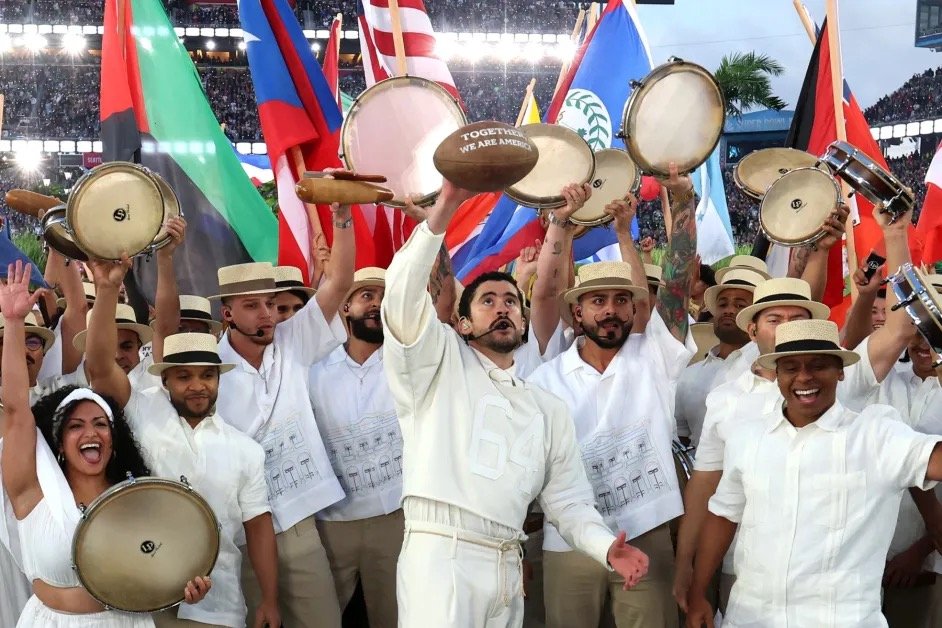
Photo by Kevin Mazur (Getty Images)
The setlist contained hits spanning his career, including “Safaerea”, “EoO”, “BAILE INVoDABILE”, “CAFé CoN RoN” and more. His biggest song, DtMF was saved for last. Just before the song, he gave a brief, inspiring speech in Spanish about his journey to get to this point and how he believed in himself the whole way. Flag bearers ran out with the flags of every nation in the Americas, as Bad Bunny exclaimed God bless to each one. Carrying a football in his hand bearing the words “TOGETHER WE ARE AMERICA”, no room for misinterpretation is left at all. Finally, Bad Bunny, the flag bearers, and dancers alike sang out “DtMF”.
The song, containing melancholy lyrics about remembrance and nostalgia, is not sad at all. Rather, it becomes an almost euphorically happy celebration. The song unites the different nations in shared love. A love for a place and of a people. When sung collectively and so passionately, it’s far bigger than the sum of its parts. Bad Bunny is right, the power of love trumps all.